

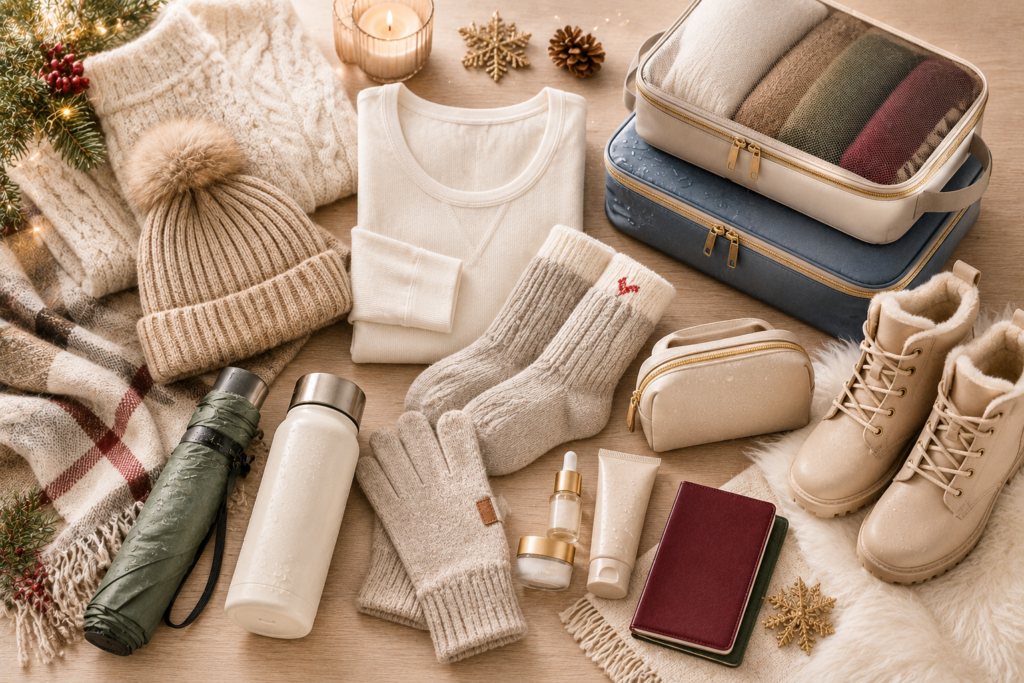
Wondering what to pack for Europe in winter? Packing for Europe in winter can feel tricky because cold weather travel usually means bulky clothes, unpredictable rain, icy streets, heated indoor spaces and limited luggage space. Whether you are visiting Paris, London, Amsterdam, Prague, Vienna, Switzerland, Germany, Scandinavia or Christmas markets across Europe, the right winter travel essentials can help you stay warm, dry and comfortable without overpacking. This Europe winter packing list focuses on practical, affordable items you will actually use, including thermal tops, wool socks, gloves, a beanie, compact umbrella, waterproof boots, travel moisturizer, compression bags and other cold weather travel must-haves.
Europe in winter is beautiful, but it is not the season to “wing it” with random outfits. You might be walking on cobblestone streets one minute, standing outside a train station the next, then stepping into a heated café where you suddenly feel too warm. The key is not packing the thickest clothes you own. The key is packing layers, weather-proof accessories and small items that make long sightseeing days easier.
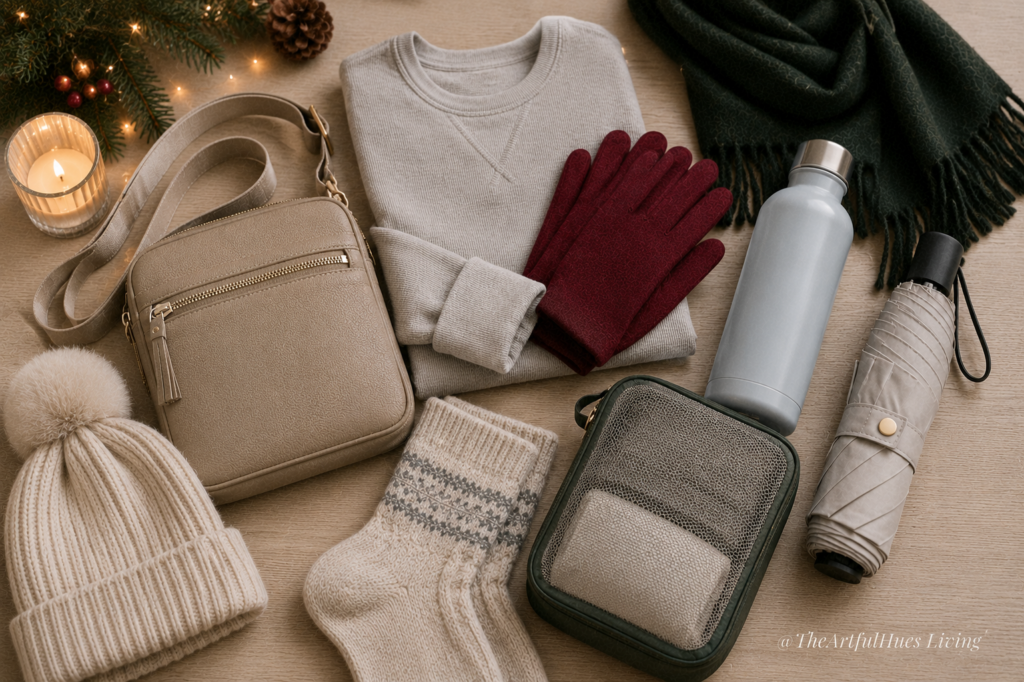
Here are 17 essentials to pack for Europe in winter.
Disclosure: As an Amazon Associate, we earn from qualifying purchases. This post may contain affiliate links at no extra cost to you.
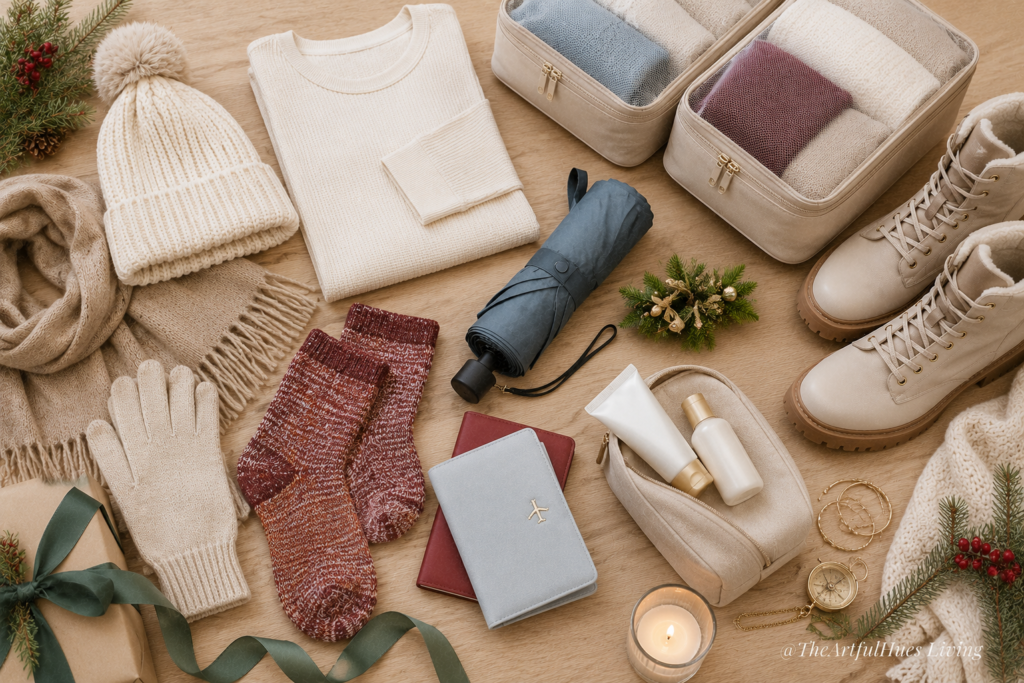
1. Thermal Tops for Layering
Thermal tops are one of the best things to pack for Europe in winter because they keep you warm without taking up much luggage space. A good thermal base layer sits close to the skin and helps trap warmth under your everyday clothes, which is especially useful when you are walking outside for hours.
If your budget allows, merino wool thermal tops are a great option because they are warm, breathable, lightweight and naturally better at handling odour than many basic synthetic layers. This means you can usually rewear them more comfortably during a trip, which is helpful if you are trying to pack light. Merino wool is also less bulky than thick jumpers, so it works well under coats, knitwear and cardigans.
If merino wool is outside your budget, you can still choose affordable alternatives such as synthetic thermal tops, heat-retaining base layers or fleece-lined thermal shirts. These can still keep you warm and are often easier to find at a lower price point. Just look for materials that feel soft, stretchy and breathable rather than stiff or overly thick.
Look for lightweight thermal tops in neutral colours like black, cream, grey or beige so they can sit under jumpers, coats and cardigans without clashing. If you are travelling for one to two weeks, two or three thermal tops are usually enough, especially if you can wash them during the trip.
Affordable product idea: merino wool thermal top, long-sleeve thermal top, heat-retaining base layer shirt or fleece-lined thermal shirt.
These are especially useful if you are visiting colder destinations like Switzerland, Austria, Germany, Poland, Lapland or Scandinavia.
2. Thermal Leggings or Base Layer Pants
Thermal leggings are another smart winter packing essential, especially if you plan to wear jeans, trousers, long skirts or dresses. Cold wind can cut through regular pants, particularly when you are walking near rivers, open squares or train platforms.
A thin thermal layer underneath makes a big difference without making your outfit look bulky. Merino wool base layer leggings are a strong choice for winter travel because they provide warmth while still allowing your skin to breathe. They are also useful for longer trips because they can be reworn more comfortably than some cheaper fabrics.
That said, you do not have to buy merino wool for everything. If you want a more affordable option, fleece-lined leggings, synthetic thermal leggings or heat-retaining base layer pants can work well for most Europe winter city trips. These are especially practical if you are visiting places where the weather is cold but not extreme.
Choose a pair that is soft, stretchy and breathable. You do not want anything too thick unless you are going somewhere extremely cold, because heavy layers can feel uncomfortable when you move indoors to heated cafés, museums, shops or trains.
Affordable product idea: merino wool base layer leggings, fleece-lined thermal leggings, synthetic thermal leggings or thin thermal base layer pants.
They are great for Christmas markets, winter walking tours and long days outdoors.
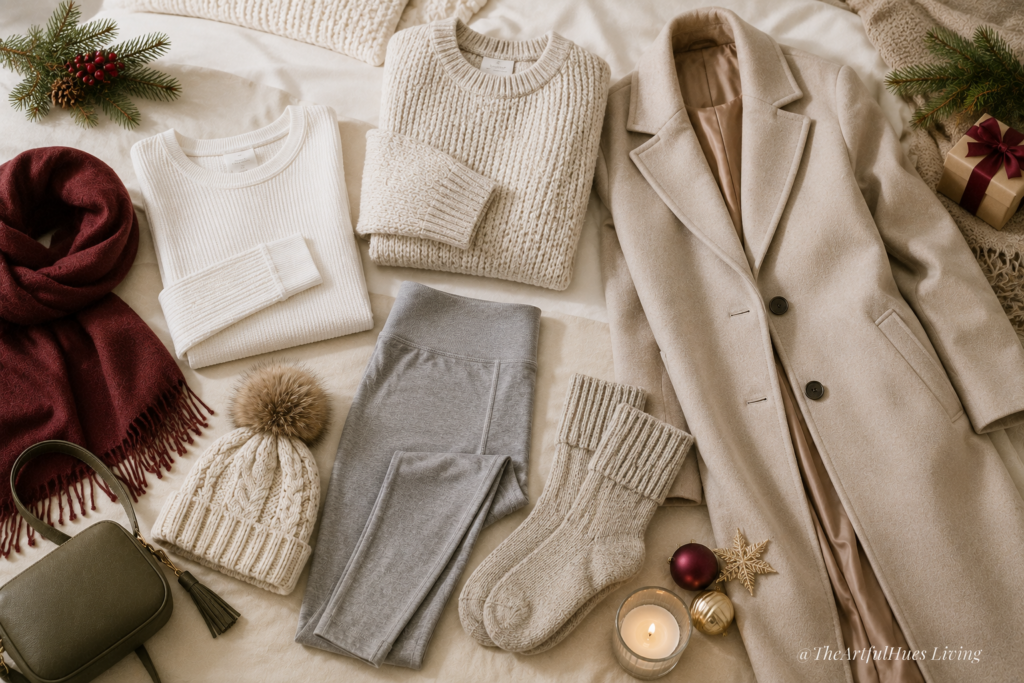
3. Wool Socks
Regular cotton socks are not always enough for winter travel in Europe. Once your feet get cold or damp, it can ruin your whole day, especially when you are walking through Christmas markets, train stations, cobblestone streets or outdoor attractions.
Merino wool socks are one of the best things to pack for Europe in winter because they are warm, breathable and better at managing moisture than basic cotton socks. They help keep your feet warmer without feeling too bulky, and they are more comfortable for long sightseeing days when you are moving between cold streets and heated indoor spaces.
Another reason merino wool socks are useful for travel is that they can usually be reworn more comfortably than regular socks, especially if you are packing light or travelling with carry-on luggage. You do not need a drawer full of thick hiking socks. A few good pairs of merino wool or wool-blend socks can work well with waterproof boots and still feel comfortable for city sightseeing.
If pure merino wool socks are outside your budget, look for wool-blend socks, thermal crew socks or winter walking socks. These can still provide extra warmth and comfort at a more affordable price point.
Affordable product idea: merino wool socks, wool-blend socks, thermal crew socks or winter hiking socks.
Pack at least three to five pairs, depending on your trip length and laundry access. For very cold destinations like Switzerland, Austria, Germany, Poland, Lapland or Scandinavia, merino wool socks are especially worth considering.
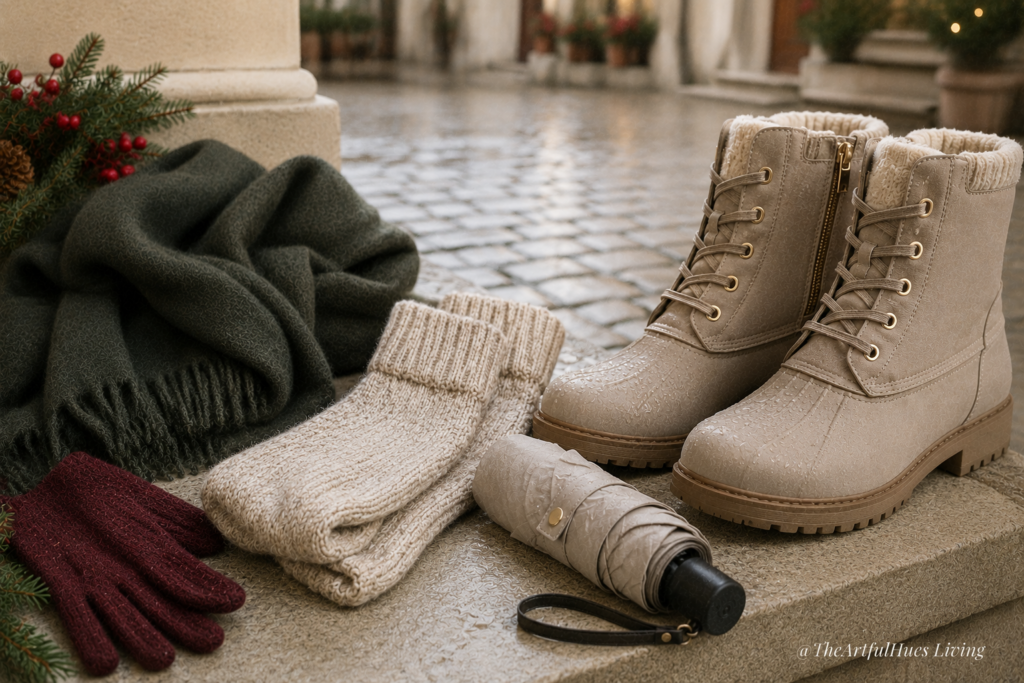
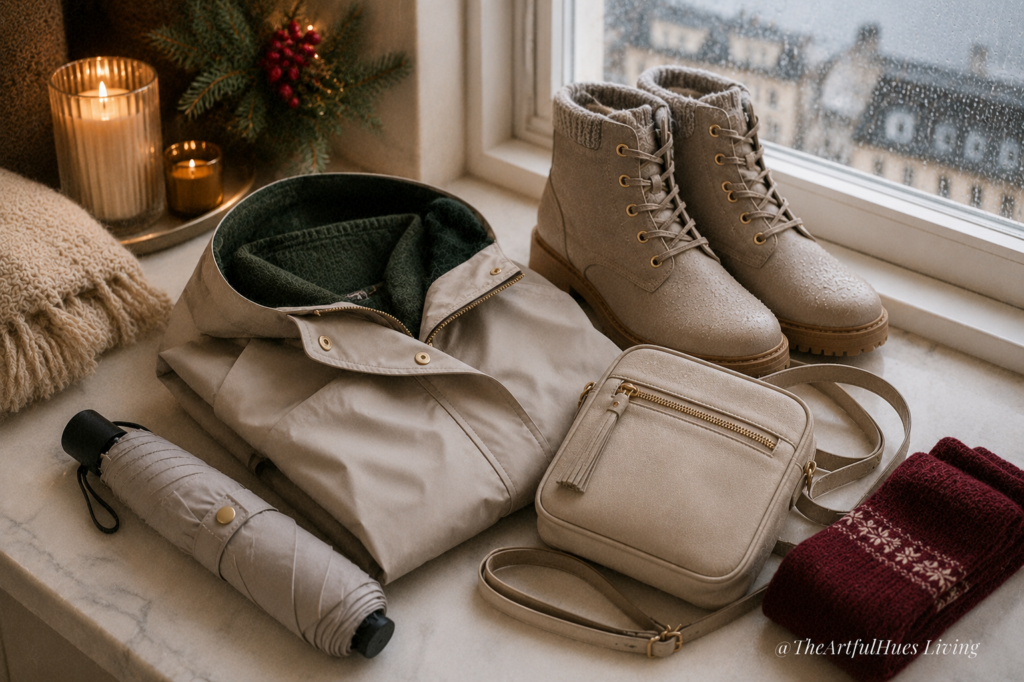
4. Waterproof Boots
If there is one item worth planning properly, it is your winter shoes. Europe in winter can mean rain, slush, snow, icy footpaths and uneven cobblestones. Pretty shoes are not helpful if your feet are wet, cold or uncomfortable by lunchtime.
Choose waterproof or water-resistant boots with good grip and enough support for long walking days. You may be walking several kilometres a day through train stations, Christmas markets, museums, old towns and cobblestone streets, so comfort matters just as much as style.
It is also worth thinking about sizing. If you plan to wear thick wool socks or merino wool socks, make sure your boots have enough room to accommodate them without feeling tight. Boots that are too snug can make your feet feel colder and uncomfortable, especially during long sightseeing days. If you are between sizes, you may want to try the boots with your winter socks before your trip to check the fit properly.
Avoid brand-new boots unless you have time to break them in before travelling. Wear them around the house or on short walks first so you can check for rubbing, pressure points or slipping.
Affordable product idea: waterproof ankle boots, insulated walking boots or lightweight winter boots.
A simple black or brown pair will go with most winter outfits and can save you from packing multiple shoes.
5. Touchscreen Gloves
Gloves are easy to forget, but you will notice very quickly when you need them. In winter, you will constantly use your phone for maps, photos, train tickets, hotel addresses and translations. Touchscreen gloves let you do that without removing your gloves every few minutes.
Look for gloves that are warm but not too bulky. If they have grip on the palm or fingers, even better.
Affordable product idea: touchscreen winter gloves or fleece-lined gloves.
They are small, lightweight and one of the easiest affiliate-friendly items to recommend because almost every winter traveller needs them.
6. Warm Beanie
A beanie is a simple but important cold weather travel essential. You lose a lot of comfort when your head and ears are exposed to cold wind, especially during early morning tours or night markets.
Choose a soft beanie in a neutral colour that works with your coat. If you prefer a more polished look, a ribbed knit beanie or wool-blend beanie can still look stylish in photos.
Affordable product idea: ribbed knit beanie, wool beanie or fleece-lined beanie.
This is especially useful for outdoor destinations, Christmas markets and winter day trips.
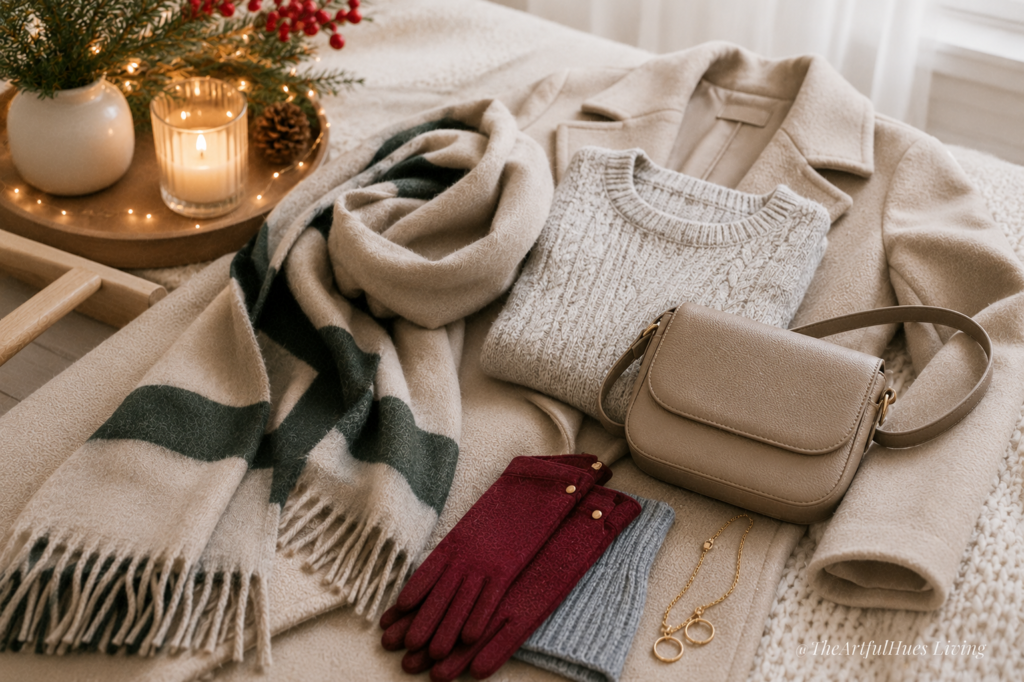
7. Large Scarf or Travel Wrap
A scarf does more than finish an outfit. In Europe in winter, it can protect your neck from wind, add warmth under your coat and double as a light wrap on flights or trains.
Choose one scarf that matches most of your wardrobe. A neutral plaid, camel, grey, cream or black scarf is easy to style and practical for travel photos.
Affordable product idea: oversized scarf, blanket scarf or soft travel wrap.
Try not to pack several scarves unless you have extra luggage space. One good scarf is usually enough.
8. Warm Winter Coat
Your coat will be in almost every travel photo, so choose carefully. A good winter coat should be warm, practical and versatile. For most European city trips, a knee-length or mid-thigh coat works well because it gives more coverage than a short jacket.
If you are visiting very cold destinations, you may want a down coat or insulated puffer. For milder cities like Paris, London, Rome or Barcelona, a wool-blend coat may be enough when layered properly.
Affordable product idea: insulated puffer coat, longline winter coat or wool-blend coat.
Choose one main coat and build your outfits around it. This saves luggage space and makes packing much easier.
9. Compact Umbrella
Winter in Europe is not always snowy. In many cities, it is more likely to be rainy, grey and windy. A compact umbrella is helpful for cities like London, Paris, Amsterdam, Brussels and Edinburgh.
Look for a small travel umbrella that is wind-resistant and easy to fit in your day bag. Avoid large umbrellas unless you are staying in one place because they can be annoying to carry around.
Affordable product idea: compact windproof travel umbrella.
This is a small item, but it can save you from buying an overpriced umbrella from a tourist shop when it suddenly rains.
10. Packable Rain Jacket or Waterproof Shell
If your winter coat is not waterproof, a packable rain jacket or waterproof shell can be useful. It is especially helpful if you expect rain or wet snow.
This does not need to be bulky. A lightweight waterproof layer can go over a jumper or under a coat depending on the weather. It is also useful for day trips, countryside visits or walking tours.
Affordable product idea: packable rain jacket or lightweight waterproof shell.
This is a practical item for travellers who want to stay dry without carrying a heavy second coat.
11. Travel Moisturizer and Sunscreen
Cold weather, wind and indoor heating can dry out your skin quickly, so a small travel moisturizer is worth packing, even if you do not usually have dry skin at home. Winter travel often means moving between freezing outdoor air and heated indoor spaces, which can leave your skin feeling tight, dry or irritated.
Sunscreen is also important, even in winter. It is easy to forget SPF when the weather is cold, but your skin can still be exposed to UV rays on cloudy days, during long walking tours or when visiting snowy destinations where light can reflect off the ground. If you are spending hours outdoors sightseeing, a lightweight sunscreen or sunscreen stick is a practical addition to your winter toiletry bag.
Choose a moisturizer that is hydrating but not too heavy, especially if you will be layering it under sunscreen or makeup. A small tube or travel-size jar is easier to pack and can fit neatly into your toiletry bag. A sunscreen stick can also be useful because it is compact, less messy and easy to reapply during the day.
Affordable product idea: travel-size face moisturizer, lightweight facial sunscreen, sunscreen stick, hand cream or moisturizing balm.
You may also want to pack lip balm, ideally with SPF, because winter air can make lips dry and cracked fast.
12. Lip Balm with SPF
Lip balm is tiny, affordable and very useful for winter travel. Even in cold weather, your lips can be affected by wind, dry air and sun exposure, especially if you are visiting snowy places where light reflects off the ground.
Look for a nourishing lip balm, ideally with SPF if you will be outdoors for long periods.
Affordable product idea: SPF lip balm, hydrating lip balm or multipack lip balm.
Keep one in your coat pocket and another in your day bag so you are not always searching for it.

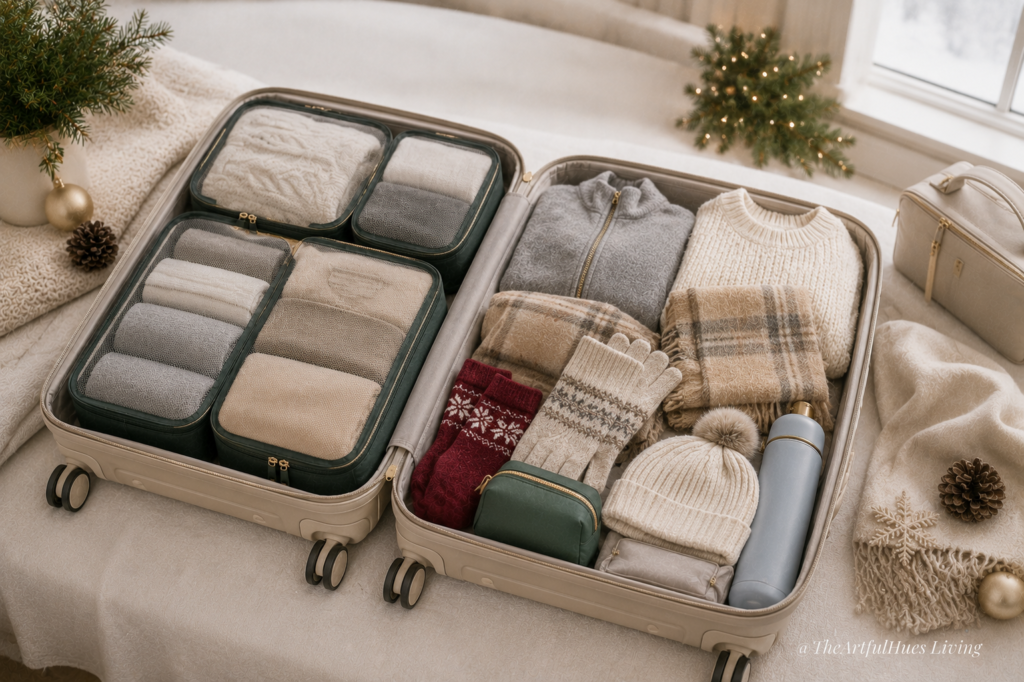
13. Compression Bags or Packing Cubes
Winter clothes take up more space, which is why compression bags or packing cubes are incredibly helpful. Compression bags are great for bulky items like jumpers, thermals and scarves. Packing cubes help keep outfits organized and make it easier to unpack in small hotel rooms.
If you are travelling with carry-on only, compression bags can make a big difference. Just be careful not to overpack because compressed clothes can still add weight.
Affordable product idea: compression packing cubes, travel compression bags or regular packing cube sets.
Use one cube for base layers, one for tops, one for underwear and socks, and one for accessories.
14. Portable Charger
A portable charger is one of the most practical things to pack for Europe in winter, especially if you are visiting colder countries where your phone battery can drain faster than usual. Low temperatures can affect battery performance, and when you are constantly using your phone for maps, train tickets, hotel bookings, translation apps, restaurant searches and photos, the battery can drop quickly.
This becomes even more important in places like Switzerland, Austria, Germany, Poland, Scandinavia, Lapland or any destination where you may spend long hours outdoors in cold weather. The last thing you want is for your phone to hit 10% while you are trying to find your hotel, access a digital train ticket or navigate back from a Christmas market at night.
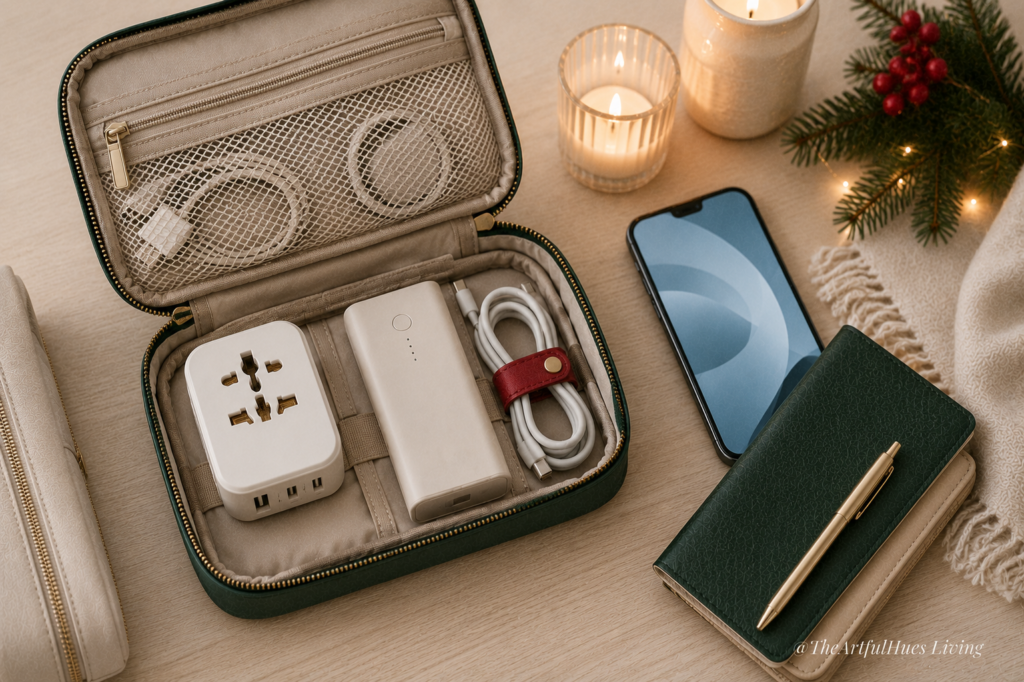
Choose a slim portable charger or compact power bank that fits easily in your day bag or coat pocket. Ideally, pick one that can give your phone at least one full charge. If you are travelling with more than one device, look for a power bank with USB-C or multiple charging ports.
Affordable product idea: slim portable charger, compact power bank or USB-C power bank.
This is especially useful for long sightseeing days, winter day trips, airport transfers, train travel and cold-weather destinations where your phone is working harder than usual.
15. Universal Travel Adapter
Europe uses different plug types depending on the country, and not all destinations use the same outlet. A universal travel adapter is a simple item that can save you from stress when you arrive at your hotel.
Look for one with USB ports so you can charge your phone, camera, headphones and power bank more easily.
Affordable product idea: universal travel adapter with USB-C and USB ports.
If you are travelling with multiple devices, this is one of the first things to add to your packing list.
16. Anti-Theft Crossbody Bag
Winter travel often means crowded Christmas markets, busy trains, metro stations and tourist areas. An anti-theft crossbody bag can make sightseeing easier because your essentials stay close to your body.
Look for a bag with secure zippers, adjustable straps and enough space for your phone, wallet, passport, lip balm, gloves and portable charger. A water-resistant material is also helpful in winter.
Affordable product idea: anti-theft crossbody bag or secure travel sling bag.
Choose a neutral colour that goes with your coat so you can use it every day.
17. Reusable Water Bottle
It is easy to forget to drink water when it is cold, but winter travel can still be dehydrating. Flights, trains, walking tours and heated indoor spaces can leave you feeling tired and dry.
A slim reusable water bottle is useful for airport days, train rides and sightseeing. If you do not want to carry a large bottle, choose a compact one that fits in your day bag.
Affordable product idea: slim reusable water bottle or insulated travel bottle.
An insulated bottle can also keep tea or warm drinks hot during winter day trips.
Bonus Items Worth Packing
If you have extra space, consider adding a few small extras that make winter travel easier:
- Hand warmers are useful for outdoor markets, long walks and very cold destinations.
- A laundry bag keeps worn socks and thermals separate.
- A small first aid pouch with pain relief, blister plasters and cold medicine can save time when you are tired.
- A foldable tote is handy for groceries, souvenirs or extra layers.
- A travel-size lint roller helps keep dark coats looking tidy.
These are not always essential, but they are practical, affordable and easy to carry for your winter trip.
Simple Europe Winter Outfit Formula
To avoid overpacking, use a simple outfit formula:
Start with a thermal top. Add a jumper or knit sweater. Wear comfortable pants with thermal leggings underneath if needed. Add wool socks and waterproof boots. Finish with your coat, scarf, gloves and beanie.
This formula works for most winter city trips because you can adjust layers depending on the temperature. If you get too warm indoors, remove the scarf, beanie or coat. If it gets colder outside, your base layers still keep you comfortable.
What Not to Pack for Europe in Winter
Try not to pack too many bulky jumpers. They take up space and are harder to dry if washed. Avoid shoes that look nice but have poor grip. Skip thin cotton socks if you are visiting cold or wet destinations. Do not pack multiple coats unless you have checked luggage and a specific reason.
The goal is to pack smarter, not heavier.
Final Thoughts
Packing for Europe in winter is all about warmth, comfort and smart layering. You do not need to bring your whole wardrobe. You need a few reliable cold weather travel essentials that help you handle rain, wind, snow, dry skin, long walks and changing indoor temperatures.
Start with thermal tops, thermal leggings, wool socks, waterproof boots, gloves, a beanie and a warm coat. Then add practical travel items like a compact umbrella, compression bags, a portable charger, travel moisturizer and an anti-theft crossbody bag.
With the right winter packing list, you can enjoy Europe’s Christmas markets, snowy streets, cozy cafés and beautiful old towns without feeling frozen, uncomfortable or overpacked.
Happy travels!
If you found this helpful, you might also enjoy our guide to 19 Brilliant Europe Summer Travel Essentials That Make Packing So Much Easier.
For more travel essentials and packing organization inspiration, follow The Artful Hues on Pinterest.